This year I was honoured to win first place in the Kemosa Scholarship for First Nations, Métis, and Inuit Mothers Who Write. Again. I won first place in 2019 and didn’t expect a repeat.
On April 14, 2023, one of the co-founders, Nhung Tran-Davies, arranged an event for current and past winners to present their work.
Nhung is an author herself, and she exudes warmth and kindness. As the event was gearing up to start, Nhung ensured the venue and the food was in order, snapping pictures as she went along. Co-founder of the scholarship, Richard Van Camp, opened the evening’s program with inspiring words, followed by Ellen Kartz from the Writers’ Guild of Alberta.
All the writers there spoke of intergenerational and personal trauma. Their words were a mixture of grief, healing, laughter, and love. Poetry. Essays. Memoirs. They spoke of the healing power of writing. I have used my writing to heal, too. Writing the words down, and getting them out, helps to keep them from haunting your insides.
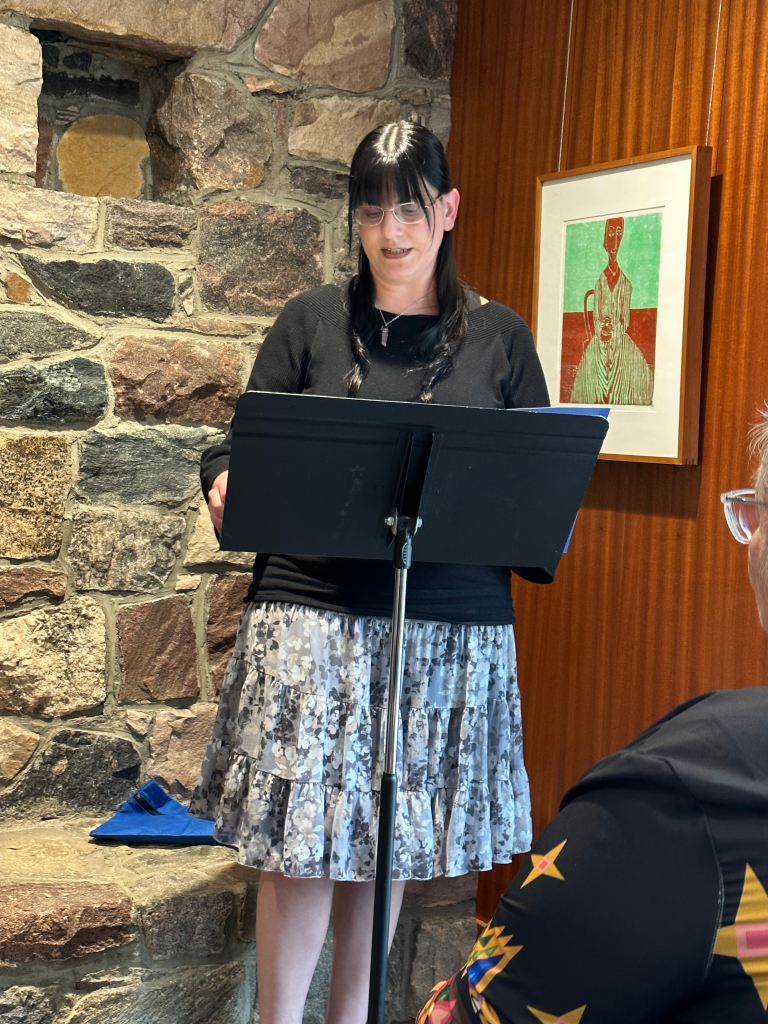
When it was my turn, I read the first chapter of my young adult fantasy novel, Shadow of the Moon, which I submitted with my scholarship application. I felt so out of place.
Feeling out of place is a common sentiment regarding my Métis heritage. I do not feel as though I belong or that I have the right to belong. My dad grew up dealing with prejudice, so he didn’t want to identify as Métis. So, while growing up, I didn’t identify as Métis. When I was seventeen, my grandpa took me to get my Metis card.
When I was little, I remember Dad taking me, my sister, and my mom when he quoted drywall and stucco jobs. My mom was blonde-haired and blue-eyed, and our presence seemed to dull the prejudice he felt. No one in my family talked about their history, at least not when I was around. And I never asked. Again, I didn’t feel I had the right to ask, to unearth old feelings and trauma.
As we snacked on hors d’oeuvres after the readings, my son said, “Mom, everyone else talked about themselves and read personal stuff, and you had your fantasy story.”
I replied, “I know. I felt so awkward and out of place.”
Then, my boyfriend stated that it shows how everyone’s experience with identity and being indigenous is different. And he was right – every writer that spoke had diverse stories.
Some memories from my childhood cause me to believe that I am not without intergenerational trauma. I’ve just never heard the tale of the source. And maybe my lack of a story is a story.
I would love to read your stories in the comments below.
 Falon Fayant
Leave a comment